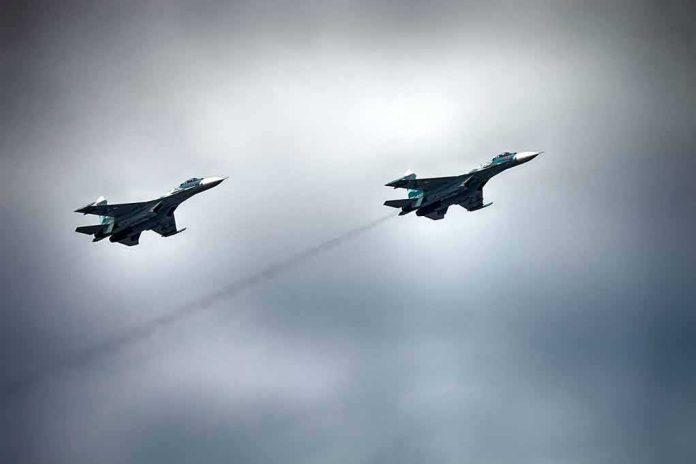
A U.S. Air Force F-15E was shot down over Iran, and both American crew members were rescued in a high-risk mission that underscores how dangerous this war has become for U.S. forces.
Story Highlights
- U.S. officials confirmed a U.S. fighter was downed over Iran; both aircrew were rescued alive.
- The Air Force says the shootdown happened during a combat mission early April 2026.
- Reports describe it as the first known loss of a U.S. fighter over Iran in this war.
- Conflicting details remain on the exact date and weapon used to down the jet.
What Pentagon and Air Force Officials Confirmed
Reuters reported that a U.S. fighter jet was shot down over Iran in early April, and that U.S. forces recovered one crew member as search teams looked for the second. The U.S. Air Force later stated that both service members were rescued from Iran after their F-15E was shot down during a combat mission on April 2, with the rescues completed on April 4. These accounts establish the core facts: the jet went down, and both aircrew survived and returned to U.S. custody.
Military Times cited U.S. Central Command as saying that all U.S. fighter aircraft were accounted for when addressing another claim circulating the same day. That comment did not dispute the loss reported by Reuters, which multiple outlets said involved an F-15E Strike Eagle. The Air Force release did not name the crew, and Pentagon statements withheld identities, which is common during active operations and for family privacy.
How the Downing Is Framed in the Wider War
Reuters described the incident as the first known shootdown of a U.S. fighter in this conflict, marking a shift after weeks of heavy air operations. The loss matters because it shows that Iran can still threaten advanced aircraft even after sustained strikes. The Air Force said U.S. operations into Iran continued after the rescues, signaling that the mission set did not pause despite the risk and the complex recovery effort required to bring the crew home.
Stars and Stripes reported that President Trump said the second airman was rescued and was “safe and sound,” aligning with the Air Force’s account that both were recovered alive. Military Times later reported that both crew members remained in U.S. care after the operation. Together, these updates show the rescue progressed over days, consistent with a deep, contested recovery inside hostile territory, which typically involves many aircraft and units.
Conflicting Details on Timing and the Weapon Used
The timeline and weapon details vary across public reports. Reuters dated the shootdown to April 3, while the Air Force release said the jet was downed on April 2, with rescues completed April 4. The New York Times noted that President Trump said the jet was downed by a shoulder-fired missile, a man-portable weapon often used at lower altitudes. Other outlets described Iranian air defenses more broadly. No official technical finding with a named missile has been made public in these sources.
Those differences are common in wartime reporting. Units fight while public affairs manages sensitive information, so early reports can differ by a day or hedge on the exact weapon. What remains solid is the event itself: a U.S. F-15E was lost over Iran, and both aircrew survived and were rescued. That outcome reflects high-end training, rapid decision-making, and a joint rescue system that worked under fire.
Why This Incident Resonates at Home
This shootdown and rescue feed a larger worry many Americans share: even with vast budgets and promises from Washington, U.S. troops still face real danger from enemies who adapt fast. People on the right see the cost of long wars and strain on our forces. People on the left see the risk of escalation and the human toll. Both sides question whether leaders in the capital level with them about goals, risks, and how victory is defined in conflicts that do not end quickly.
This case also shows how fast-spin messaging can blur facts. Iran pushed claims. U.S. officials spoke carefully. Media outlets differed on dates and weapons. That confusion widens the trust gap. Clearer public records from the government—like an after-action summary—would help citizens understand what happened and why. Until then, the confirmed core stands: one U.S. fighter down over Iran, both aircrew rescued, and American operations continuing despite the danger.
Sources:
en.wikipedia.org, militarytimes.com, difesaonline.it, stripes.com, globalmilitary.net