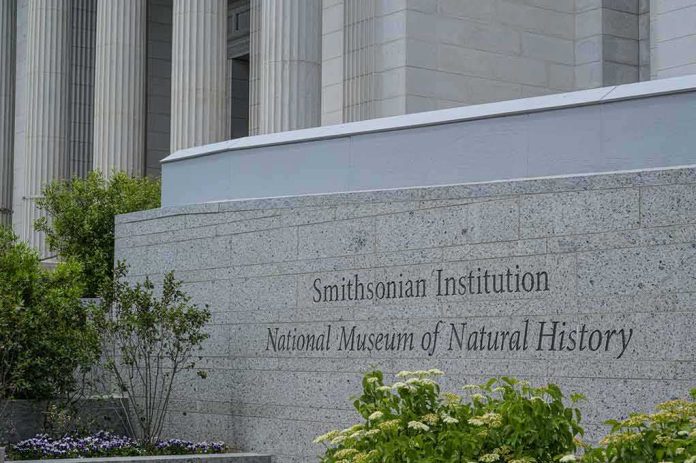
Congressional Republicans say the nation’s history museum is pushing ideology on taxpayers, and they put that charge on the record this week.
Story Snapshot
- House committees held hearings accusing the museum of “radical revisionism” and biased exhibits.
- The museum director defended scholarship and said the museum does not take sides in politics.
- Critics cited specific labels and programs they say inject ideology into history displays.
- The clash matters because Congress controls funding and public trust is on the line.
What Congress Did and Why It Matters
House Republicans ran back-to-back oversight hearings on July 21 and 22, 2026, targeting the Smithsonian’s National Museum of American History. Committee notices and wrap-ups charged the museum with “radical revisionism,” “divisive” programming, and “factually inaccurate” content. Lawmakers said the museum, funded in part by taxpayers, must reflect a broad, unifying national story. Because Congress holds the purse strings, these hearings set up real leverage over exhibits, staffing, and future budgets.
Members of the House Oversight Committee, chaired by Kentucky First District Congressman James Comer, say a “woke” Smithsonian museum is erasing American history. Some are alleging that major American figures are almost entirely missing from the museum—including men like George… pic.twitter.com/0jy1EhePZM
— Commonwealth Policy Center (@CPC4Kentucky) August 14, 2026
Republican members and witnesses argued the museum centers identity politics over shared achievements. They pointed to examples like staff toolkits cited in questioning, a “transgender youth” display, and labels they say frame American life through oppression. One cited label reportedly linked Mickey Mouse’s design to blackface minstrelsy. Supporters of the inquiry claim this pattern sidelines founders, inventions, and milestones, and loads galleries with images of shackles and grievance themes.
How the Museum Responded Under Oath
Museum director Anthea Hartig told lawmakers the institution follows Smithsonian standards of scholarship, accuracy, independence, and nonpartisanship. She said the museum “does not take sides in America’s political debates.” Hartig described curators’ work as adding voices and evidence that prior tellings left out, so visitors can see more of the whole. The museum’s public materials also stress accessibility and inclusion as parts of its mission to tell the full national story.
This defense frames the dispute as interpretation, not simple errors. Some contested labels may come from scholarly debates that many find uncomfortable, not from bad faith. That is why the fight has drawn national attention. The White House and House leaders allege “ideological capture,” while historians and museum staff cite research standards and independence. The result is a classic battle over who defines the “official” story that school groups and families see.
Why This Hits a Nerve Across the Spectrum
Americans are already frustrated with rising costs, cultural fights, and a sense that elites set the rules. When the country’s flagship history museum appears to lean into any agenda, right or left, trust erodes. Conservatives fear activism replaces pride in the founders, industry, and spaceflight. Liberals fear political pressure will erase hard truths about slavery, inequality, and social movements. Both sides worry government stewards are serving institutions first, not the public interest.
Bishop Earl Walker Jackson, a descendant of slaves, is blasting what he calls anti-American "indoctrination" at the Smithsonian National Museum of American History‼️
"This is a wonderful country; it's the greatest nation on earth."
Jackson, whose great-grandparents were…
— D (@D_Pheenyx) August 10, 2026
Congressional control of funding raises the stakes. Lawmakers can demand documents, order audits, or tie money to exhibit changes. Republicans say that is accountability for taxpayer institutions. Critics warn it can chill scholarship and turn galleries into campaign billboards. The House press office highlighted examples and promised further review. Next steps could include releasing full exhibit texts, toolkits, and budget lines so the public can judge the evidence for itself.
What To Watch Next: Evidence, Balance, and Fixes
Key gaps remain. Much of the public record features partisan summaries, short clips, and selective screenshots. The strongest way forward is sunlight: full label texts, dated photos, and internal review notes for the cited exhibits. Independent historians could also audit gallery balance, scoring how achievements, failures, science, war, commerce, and civil rights appear across spaces. Clear, shared facts would let Congress target real problems without gutting trust in honest curation.
Sources:
facebook.com, npr.org, docs.house.gov, cha.house.gov, youtube.com, abcnews.com, americanhistory.si.edu