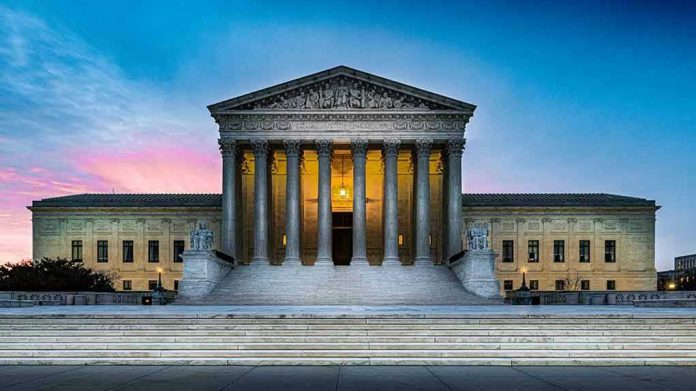
The Supreme Court’s conservative majority delivered stunning rebukes to Trump administration attempts to bypass judicial review through shadow docket maneuvers, dealing five major defeats that exposed cracks in what many assumed would be unwavering support.
Story Highlights
- Supreme Court issued 25 shadow docket rulings on Trump actions, with 5 going against the administration despite conservative majority
- Key defeats included blocking National Guard federalization, halting Venezuelan deportations, and preventing immigration policy changes
- Over 700 lower court cases challenged Trump executive orders, with 253 active suits remaining by late 2025
- Conservative justices Alito and Thomas joined liberal colleagues in some dissents, signaling judicial independence
Shadow Docket Strategy Backfires on Immigration and State Powers
President Trump’s administration faced unexpected resistance when the Supreme Court denied critical requests through its shadow docket process. On April 10, the Court blocked immigration return policies, followed by a April 19 denial of Venezuelan removal procedures. The December 23 rejection of National Guard federalization in Illinois marked the administration’s most significant defeat, with conservative Justices Alito and Thomas joining dissents that emphasized state sovereignty concerns over federal overreach.
Lower Courts Mount Unprecedented Resistance Campaign
More than 225 federal judges across the country issued rulings against Trump administration policies throughout 2025, creating a litigation tsunami exceeding 700 cases. The resistance spans multiple policy areas including federal workforce reductions, independent agency restructuring, and immigration enforcement. District courts in Washington D.C. particularly targeted executive orders affecting law firms’ security clearances, with cases like EEOC v. Trump still pending as of May 2025.
Conservative Justices Break Ranks on Constitutional Principles
The Supreme Court’s 6-3 conservative majority delivered 20 favorable rulings for the Trump administration, but the five defeats revealed significant fractures. Liberal justices Sotomayor, Kagan, and Jackson consistently opposed administration overreach on due process grounds. However, the unexpected alliance of conservative justices with liberal colleagues on specific issues like state National Guard authority demonstrated that constitutional principles occasionally trumped partisan loyalty, undermining the administration’s strategy of relying on friendly courts.
These judicial pushbacks represent a critical check on executive power that protects constitutional governance. While the administration secured most of its requests, the strategic defeats on immigration and federalism issues preserve essential constitutional boundaries that protect both individual rights and state sovereignty from federal government overreach.
Sources:
Supreme Court Shadow Docket Tracker: Challenges to the Trump Administration
Tracker: Litigation & Legal Challenges to the Trump Administration
Supreme Court Rejects Trump Administration’s Request in Dispute Over Immigration Judges
Trump Administration Litigation Tracker
Interim Orders, the Presidency, and Judicial Supremacy