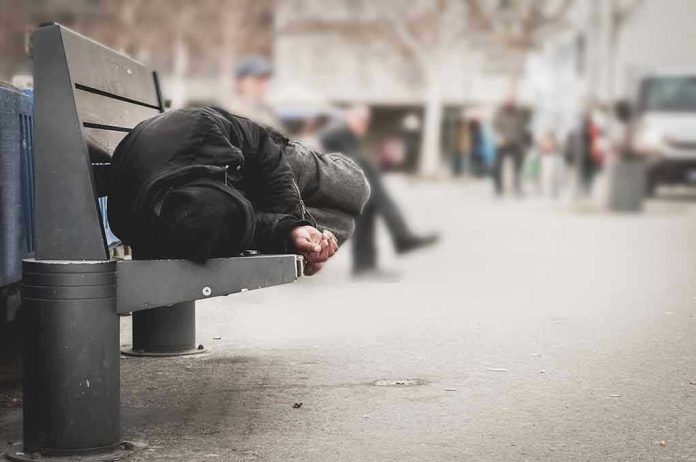
A radical plan to halt homeless encampment sweeps in New York City risks turning already struggling streets into permanent shanty towns, and even seasoned law-and-order experts are warning: this is not the time for experiments.
Story Snapshot
- Mayor-elect Zohran Mamdani wants to end NYPD homeless encampment sweeps across New York City.
- A former top NYPD official warns the policy will fuel shanty towns and undermine public safety.
- The clash exposes a deeper progressive push to normalize street encampments instead of enforcing basic order.
- For conservatives, the debate highlights why strong policing and accountability matter for working families.
Far-Left Mayor-Elect Targets Encampment Sweeps
Mayor-elect Zohran Mamdani is signaling a sharp left turn on public order by promising to end homeless encampment sweeps, a tool New York City has long used to prevent sidewalks and parks from turning into semi-permanent tent cities. His proposal would pull back police and sanitation departments from dismantling makeshift camps, effectively allowing people to set up long-term encampments on public property. For many residents who already feel abandoned by city leaders, this sounds less like compassion and more like surrender.
Mamdani frames his approach as more humane, arguing sweeps criminalize poverty and push vulnerable people deeper into the shadows. Supporters claim that clearing encampments fails to solve homelessness and that resources should go toward housing and services instead. That argument resonates with progressive activists who routinely oppose enforcement-heavy strategies. Yet it raises a hard question for working New Yorkers: what happens when compassion for a few translates into lawlessness and fear for everyone else trying to live, work, and raise families in these neighborhoods?
Ex-NYPD Chief Warns of Shanty Town Surge
A former top NYPD official is sounding the alarm, warning that Mamdani’s plan will not produce safer streets or better outcomes, but rather a sharp rise in shanty towns along city sidewalks. From decades in law enforcement, he has seen how quickly small clusters of tents can expand when word spreads that authorities will no longer intervene. His blunt assessment is that New York “doesn’t have time for experiments” with basic public safety, especially after years of crime spikes and declining quality of life.
The ex-chief’s criticism draws on real-world experience rather than academic theory. Cities that relaxed enforcement against encampments during the last decade, from West Coast hubs to smaller liberal enclaves, saw major growth in unsanitary, unsafe camps that became magnets for drugs, violence, and exploitation. Residents soon complained of blocked sidewalks, open-air drug markets, and fires linked to makeshift heating sources. Those patterns should concern any leader serious about protecting both vulnerable homeless individuals and the law-abiding public that depends on safe, clean streets.
Public Safety, Order, and the Rights of Taxpayers
For many conservatives, the core issue is not whether to help the homeless, but whether city leaders respect the rights of taxpayers to walk down a sidewalk without stepping around tents and trash. Homeless individuals have basic human dignity, but so do families with children trying to get to school, seniors navigating crowded streets, and small-business owners fighting to stay afloat. When government allows encampments to take root, it sends a message that the rules no longer apply evenly, and that responsible citizens come last.
Public order policies like encampment sweeps exist because shared spaces require clear standards. When leaders weaken those standards, small problems quickly become entrenched crises that cost far more to reverse. Conservatives argue that a serious approach should pair firm enforcement with targeted services: clear illegal encampments, connect people to shelters and treatment, and refuse to accept the idea that living in a tent on a sidewalk is an acceptable long-term outcome. That balance respects compassion while defending the basic functioning of a city.
Progressive Experiments Versus Proven Law-and-Order
The dispute over Mamdani’s plan reflects a broader ideological divide that frustrated many Americans throughout the last administration: progressive leaders repeatedly pursued experiments that undermined enforcement and stability, from soft-on-crime prosecutors to tolerance of open-air encampments. Those policies often hit working- and middle-class communities the hardest, eroding trust in government and deepening the sense that the political class was insulated from the consequences of its own decisions.
With Trump back in the White House prioritizing borders, law enforcement, and accountability, many conservatives see local battles like this as the next front. Federal leadership can set a tone, but city halls still choose whether to back police, enforce basic standards, and protect families from the fallout of radical social experiments. New Yorkers who remember cleaner, safer streets will ultimately decide whether they want a city of order and opportunity, or one where sidewalk shanty towns become the new normal.