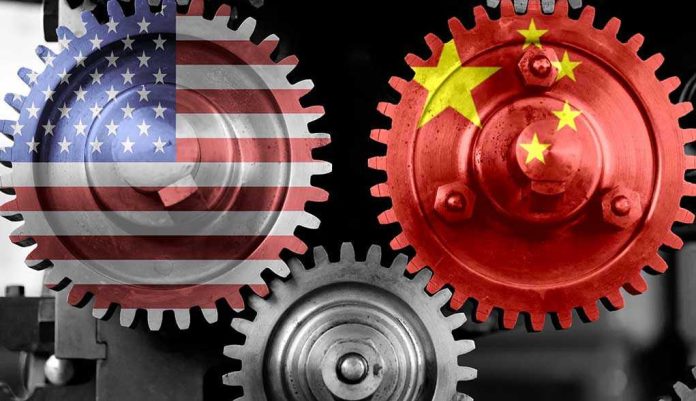
China’s iron grip on over 80% of the global battery materials supply chain threatens U.S. military readiness and economic security, sparking national security concerns.
At a Glance
- China dominates over 80% of the global supply chain for battery materials.
- This control impacts U.S. military systems that rely on these materials.
- U.S. companies face significant barriers in domestic production.
- Urgent calls for policy intervention to counteract China’s influence.
China’s Strategic Control Over Battery Materials
China’s strategic control over critical battery materials, including lithium, graphite, cobalt, and manganese, highlights a disturbing trend in global supply chains. For decades, China has pursued aggressive overseas investments and industrial policies that have allowed it to dominate this essential market. Meanwhile, U.S. companies struggle with permitting obstacles and processing limitations that stifle domestic production efforts. With batteries powering key military technologies, China’s dominance poses a direct threat to U.S. national security.
China’s Belt and Road Initiative (BRI) has further cemented its control over critical mineral deposits in resource-rich nations, often through state-backed banks and joint ventures. By leveraging massive subsidies and predatory pricing, Beijing has successfully undercut global competitors, securing a strategic advantage that leaves the U.S. and its allies heavily dependent on Chinese-controlled supply chains.
Implications for U.S. Defense and Security
The implications for U.S. defense are dire. Advanced batteries are integral to modern military systems, powering everything from drones to autonomous vehicles. The U.S. Department of Defense acknowledges its reliance on these critical materials, yet remains hampered by regulatory and structural barriers preventing a robust domestic supply chain. Recent efforts to onshore battery manufacturing have been met with delays and lack of infrastructure, further exacerbating the problem.
China’s willingness to use its market power as leverage is not new. The 2010 rare earth export restrictions against Japan set a precedent for using mineral supply chains as geopolitical tools. Today, the U.S. faces similar risks, with defense contractors experiencing uncertainty and higher costs due to supply chain bottlenecks caused by Chinese dominance.
Urgent Calls for Policy Intervention
The Foundation for Defense of Democracies (FDD) has released a report detailing China’s control over more than 80% of critical battery materials, prompting urgent calls for action. Industry experts and policymakers are advocating for the use of the Defense Production Act and other emergency measures to accelerate U.S. battery supply chain development. The need to decouple from Chinese-controlled supply chains has become a growing concern among U.S. policymakers.
Despite some new investments in the sector, U.S. dependency on Chinese supply chains remains acute. The market share of Chinese companies in battery materials continues to grow, highlighting the urgent need for a strategic response. As China tightens its grip, the U.S. must consider significant policy interventions to safeguard its military and economic interests.
Long-term Consequences and Strategic Considerations
Long-term, the consequences of continued Chinese dominance could force the U.S. and its allies into strategic concessions, risking their position in military technology. The loss of industrial base and innovation capacity in critical sectors poses a serious threat to national security. The economic implications are equally troubling, with U.S. companies losing competitiveness and global battery prices subject to Chinese manipulation.
Resource-rich developing countries hosting Chinese-led mining projects may face environmental and governance challenges, further complicating the geopolitical landscape. As tensions between the U.S. and China escalate, the push for industrial policy and supply chain security grows more pronounced. The stakes are high, and the time for action is now.