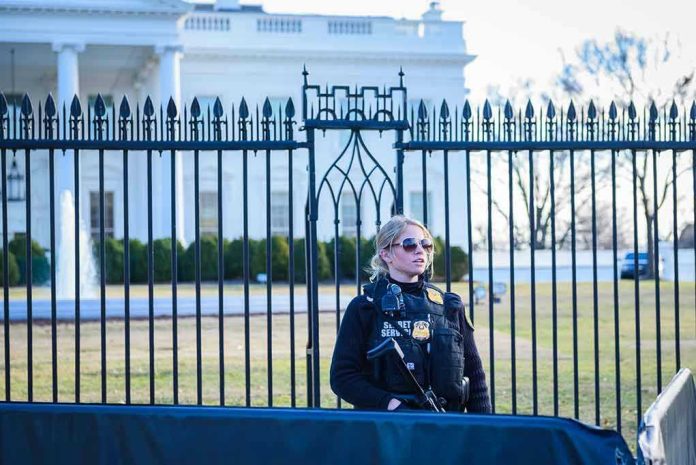
In a brazen and alarming display of modern technology misuse, a high-ranking U.S. Secret Service official was targeted in a swatting incident that sends shockwaves through our national security framework.
At a Glance
- A Secret Service official was the target of a swatting attack on July 4, 2025.
- The call falsely reported a gun incident involving the official’s non-existent daughter.
- Law enforcement quickly identified the call as a hoax, preventing potential tragedy.
- The attack underscores the vulnerability of emergency systems to technology misuse.
Swatting: A Dangerous Trend
Swatting, a malicious act involving fake emergency calls to elicit a police response, has been on the rise. Historically, these incidents have leveraged personal data, but recent developments have seen the introduction of deepfake technology to make these hoaxes even more convincing. This tactic was recently employed in an incident targeting a high-ranking U.S. Secret Service official. On July 4, 2025, a swatting call falsely claimed that the official’s daughter was armed and dangerous.
The official, who resides in an undisclosed community, was saved from a potentially disastrous confrontation due to the quick thinking of local law enforcement. Aware of the official’s family situation and the potential for hoaxes, they swiftly recognized the call as fraudulent. This incident was later revealed by Michael Centrella, Assistant Director of Secret Service Field Operations, at a cybersecurity symposium in San Francisco.
The Role of Technology
This incident highlights the escalation of swatting tactics, with perpetrators possibly using advanced voice synthesis technology to mimic the official’s voice, adding a layer of complexity to these crimes. Such technological advancements make it increasingly difficult for authorities to discern real threats from fabricated ones. The FBI and other federal agencies are actively investigating the case, reflecting a growing recognition of the threat posed by these technological abuses.
The rise in these incidents poses a significant challenge to law enforcement agencies nationwide. The ability to manufacture convincing scenarios using deepfake technology not only endangers the targeted individuals but also strains resources as agencies must respond to these false alarms. This misuse of technology represents a direct attack on public safety and places undue stress on our emergency response systems.
Impact and Implications
In the short term, the vigilance of local law enforcement averted a potential tragedy. However, the long-term implications are more concerning. As perpetrators become more sophisticated, the pressure mounts on law enforcement and federal agencies to adapt and develop new strategies to counter these threats. This incident underscores the urgent need for policy changes around emergency call verification and enhanced inter-agency communication to prevent similar incidents in the future.
From an economic perspective, swatting incidents divert critical resources away from genuine emergencies, impacting community safety and eroding public trust in emergency response systems. Politically, if high-profile figures continue to be targeted, there may be increased calls for legislative action to bolster security protocols and protect against these high-tech threats.
A Call to Action
The need for vigilance and adaptability in the face of evolving threats cannot be overstated. Law enforcement agencies must continue to refine their tactics, leveraging local knowledge and inter-agency collaboration to prevent future swatting tragedies. Public awareness and education about the dangers and implications of swatting are also crucial in combating this growing menace.
Ultimately, the safety of our communities and the integrity of our emergency response systems depend on our ability to rise to the challenge posed by these technological threats. As this incident demonstrates, the stakes are high, and the time for action is now.