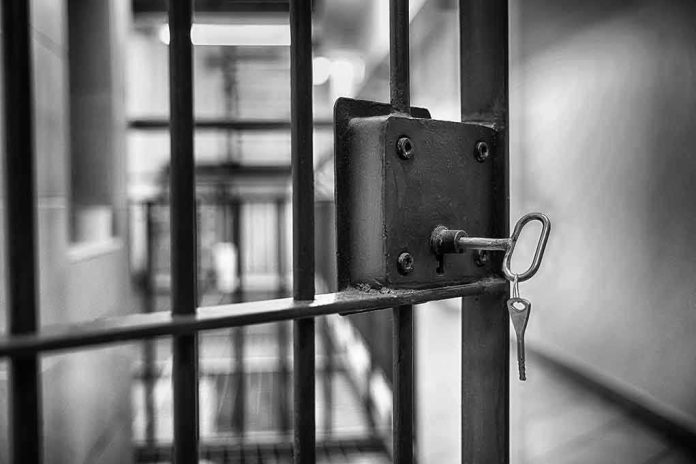
After five months and more than 1,400 migrants detained in partnership with ICE, Nassau County’s jail has become ground zero for a national immigration crackdown—raising the stakes for local law enforcement, immigrant families, and anyone who thought New York was immune to federal overreach.
At a Glance
- Nassau County jail has processed over 1,400 ICE detainees since February 2025.
- County police are being deputized as ICE agents, though not yet deployed in that role.
- County Executive Blakeman insists only migrants accused of crimes are targeted, not law-abiding immigrants.
- Civil liberties groups warn the partnership erodes community trust and threatens public safety.
- The partnership reverses a 2019 policy that limited local ICE cooperation after a court ruling.
Nassau County Jail: From Local Facility to Immigration Enforcement Hub
The East Meadow jail in Nassau County, New York, has become a focal point for federal immigration enforcement after a new partnership was announced between the county and ICE in February 2025. This dramatic shift comes just years after county officials ordered ICE off the premises following a state court ruling that holding individuals solely on ICE detainers was unlawful. Now, under County Executive Bruce Blakeman, the county has swung in the opposite direction, not only welcoming ICE back but offering up 50 jail cells for the exclusive use of federal immigration authorities. Migrants can be held there for up to 72 hours before being deported or transferred to long-term detention.
Since the program launched, monthly detainee numbers have fluctuated, peaking at 437 in June 2025. ICE agents now have a permanent presence at the jail, and Nassau County police officers are being trained and deputized to act as ICE agents. As of July, these officers have not yet made any arrests in their new capacity, but the infrastructure is in place for local police to operate as an extension of federal immigration enforcement whenever ICE decides to flip the switch.
Stakeholders Clash: Law Enforcement, Civil Liberties, and Local Communities
Blakeman has repeatedly emphasized that the program targets only those immigrants accused of crimes, not ordinary families or individuals who simply lack documentation. He has gone on the record to say this is “not about conducting raids,” but about ensuring public safety. That’s a message that resonates with many frustrated residents who feel that the rule of law has been sidelined by years of lax enforcement and sanctuary policies.
Civil liberties groups, however, are sounding the alarm. The New York Civil Liberties Union (NYCLU) has condemned the partnership, warning that it will erode community trust and make immigrants less likely to report crimes or cooperate with police. They argue that when local law enforcement becomes entangled with federal immigration, everyone pays the price—especially when it comes to public safety and the risk of wrongful detention. For Nassau’s immigrant communities, anxiety is running high, and advocates report a chilling effect on everything from crime reporting to school attendance and medical care.
A Policy Reversal with Local and National Ripple Effects
This partnership is a sharp reversal from the county’s 2019 decision to distance itself from ICE after a state appellate court ruling. That decision was part of a broader movement in New York to limit local ICE cooperation. Now, with the federal government leaning hard on localities and Nassau County all too eager to comply, the pendulum has swung back. The county’s move is being watched closely by other jurisdictions in New York—and beyond—who may be considering similar arrangements.
County resources are now being used to support federal immigration enforcement, raising questions about local priorities and the potential diversion of attention from other pressing issues. The partnership has also become a flashpoint in the ongoing culture war over immigration policy, law enforcement, and the balance of federal and local power. For supporters, it’s a long-overdue return to common sense and the rule of law. For critics, it’s a dangerous escalation that threatens civil liberties and community safety.
Legal, Social, and Political Fallout: What Happens Next?
In the short term, the most visible effect has been the sheer number of migrants detained—over 1,400 in just five months, with many facing swift deportation. The long-term implications are less clear. Legal challenges could be on the horizon, especially given the precedent set by the 2019 court ruling. If Nassau County’s approach holds up, it could become a model for other counties—particularly with the Trump administration’s clear appetite for aggressive local-federal cooperation on immigration enforcement.
The community impact goes far beyond the jailhouse walls. Families are living in fear of sudden separation. Local police may find it harder to do their jobs if immigrant communities view them as an arm of ICE rather than protectors. And as Nassau County carves out a new path, New Yorkers—and Americans more broadly—will have to decide: Is this the future of immigration enforcement, or a step too far in the wrong direction?
Sources:
Long Island Press (2025-07-10)
Long Island Press (2025-02-04)