When $800 million changes hands between Syria and a UAE megacorporation in a postwar deal, you have to wonder: is this a genuine step toward regional stability, or just another example of global elites cashing in while Americans foot the bill for foreign entanglements and crumbling priorities at home?
At a Glance
- Syria inks a 30-year, $800 million port development deal with UAE’s DP World for Tartus, aiming to modernize its infrastructure after years of war and sanctions.
- The agreement follows the toppling of the Assad regime and signals Syria’s push for foreign investment to rebuild its battered economy.
- DP World, a global port operator, will control the Tartus port under a Build-Operate-Transfer model, promising high-tech upgrades and job creation.
- Syria’s postwar reconstruction strategy includes multiple foreign partnerships, with the Tartus deal serving as a flagship for its new economic direction.
Syrian Ports Rebuilt
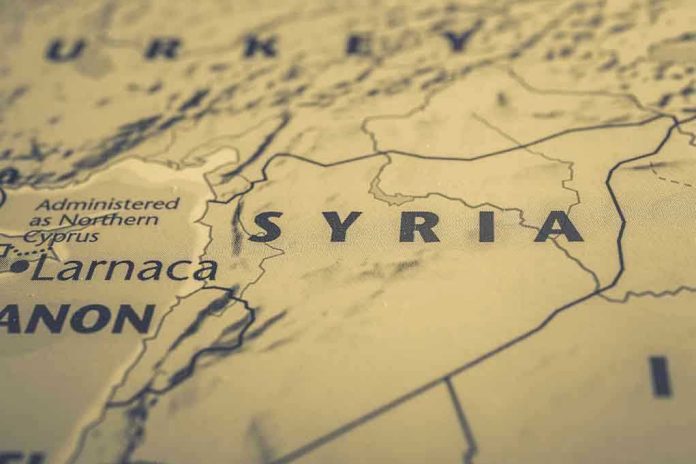
On July 13, 2025, Syria’s General Authority for Land and Sea Ports signed a 30-year, $800 million concession agreement with DP World—one of the UAE’s corporate juggernauts—to develop and operate the Port of Tartus. This handover of a critical national asset, witnessed by Syria’s President Ahmed Al-Sharaa, is being hailed as a turning point for the war-ravaged country. DP World’s CEO, Sultan Ahmed bin Sulayem, didn’t hold back on the sales pitch, promising to transform Tartus into “one of the best ports in the world.” Their plan? Pour foreign cash and advanced tech into the port, install cutting-edge cargo systems, and give Syria a shiny new logistics hub on the Mediterranean. All of this is happening as the Syrian government, fresh off the ouster of Bashar al-Assad, scrambles to show it’s open for business and eager to reconnect with global markets.
Here’s the punchline: As American taxpayers are left questioning why our own infrastructure is falling apart—roads, bridges, ports, you name it—Syria, a country that’s been a battlefield for more than a decade, is suddenly the darling of global investors. The same international community that’s happy to pour billions into foreign ports can’t seem to muster the political will to secure our own border, fix our own highways, or stop the bleeding of U.S. manufacturing jobs overseas. Instead, they cheerlead for “regional connectivity” and “foreign partnerships,” buzzwords that sound suspiciously like job creation for anyone but Americans.
Who’s Really Winning? Global Elites or Local Syrians?
The deal hands DP World full operational control of Tartus for three decades under a Build-Operate-Transfer model. In theory, this means jobs for Syrians, better trade infrastructure, and a dash of hope for a battered economy. In practice, it’s another story of elites making out like bandits while average people wait for results. Syria’s government hails the project as a symbol of economic rebirth, but let’s not kid ourselves—ownership and profits will remain in foreign hands until 2055, at best. DP World’s motivation is clear: corner the regional trade market, connect Europe, the Middle East, and North Africa, and rake in profits for shareholders. Syrian authorities are betting big on foreign capital and expertise to jumpstart reconstruction, but the risks are obvious. If political stability falters or sanctions snap back, these grand plans could turn into another white elephant on the Mediterranean.
The Bigger Picture: Postwar Syria as the “Model” for Global Partnerships?
Syria’s Tartus deal is just one piece in a pattern of postwar foreign investment. In the same breath, the new Syrian authorities inked a 30-year contract with France’s CMA CGM to overhaul Latakia port and a $7 billion energy package with Qatari, Turkish, and U.S. companies. All the right people are at the table: global shipping giants, energy conglomerates, and government officials eager to show progress. The message is clear—if you’re a multinational corporation, there’s a seat waiting for you at Syria’s reconstruction banquet. If you’re an American family struggling with inflation, good luck waiting for your own government to remember you exist.
DP World and its cheerleaders insist this is a win-win, but the real scorecard is more complicated. Sure, there’s potential for economic growth, jobs, and stability—if everything goes perfectly. But the risk is always the same: foreign powers gain leverage, locals get what’s left over, and U.S. influence in the region is reduced to a spectator sport. While the world’s power brokers toast their latest deal in Damascus, Americans can only watch and wonder when Washington will stop subsidizing everyone else’s priorities and start standing up for ours.