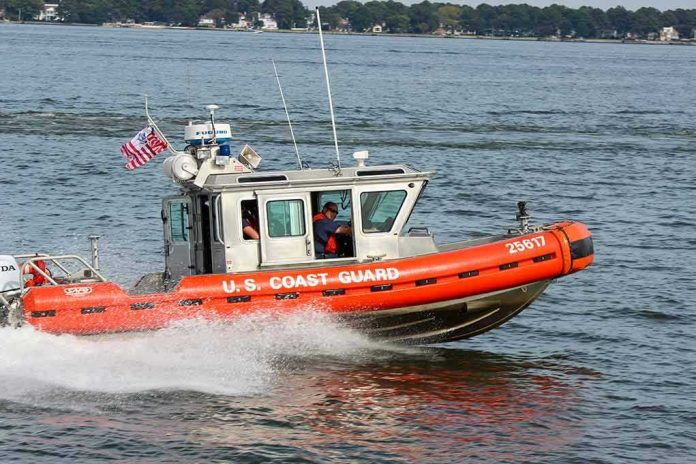
Congress is about to hand the Coast Guard a $25 billion budget hike and expanded powers, all while our nation is grappling with an immigration crisis and a federal government seemingly allergic to fiscal sanity.
At a Glance
- House and Senate move to increase Coast Guard budget by nearly $25 billion through 2029
- Bipartisan Coast Guard Authorization Act of 2025 dramatically expands fleet, tech, and personnel
- Legislation pushes Coast Guard to front lines of border security and drug interdiction
- Massive funding comes amid runaway federal spending and ongoing southern border chaos
Congress Pushes Record Coast Guard Expansion—But At What Price?
The Coast Guard Authorization Act of 2025 has sailed through the Senate and now faces a House eager to flex its national security credentials. Lawmakers from both parties are tripping over themselves to pour nearly $25 billion more into the Coast Guard’s coffers, providing for new cutters, aircraft, IT upgrades, and personnel through 2029. All this is happening at a time when the federal government can’t seem to find the brakes on its own runaway spending—and while border states are left begging for basic support in the face of unprecedented illegal crossings.
This surge of cash is justified, say its backers, by the Coast Guard’s growing list of missions: combating drug smuggling, stopping human trafficking, and now, taking on a much larger role in border enforcement. Senators and House members tout the Guard’s need for modern ships and surveillance tech to face off against cartel drone fleets and high-tech smuggling. But let’s be honest—a $25 billion jump is a far cry from the incremental updates of past years. Where’s the restraint? Where’s the accountability for every dollar spent?
The Coast Guard: From Sea Rescues to Border Security
The new bill doesn’t just give the Coast Guard more ships—it puts them squarely on the front lines of the border crisis. The White House and Congress want the Coast Guard to intercept drug runners, catch human traffickers, and enforce a tangle of new immigration rules on the water. Senator Ted Cruz and others have made it clear: this is about national security, not just maritime safety.
Meanwhile, border states like Texas have already spent billions on their own enforcement, with mixed results and little help from Washington. Now, the federal government is doubling down with military assets and Coast Guard deployments, all while pausing or cutting aid for humanitarian programs. Critics on the right see this as a long-overdue focus on security, but fiscal conservatives are rightly nervous about whether this massive cash infusion will actually fix anything—or just balloon the bureaucracy.
Bipartisan Bonanza or Fiscal Folly?
The Coast Guard Authorization Act has been hailed as a rare moment of bipartisan cooperation. Senate and House leaders have linked arms to push this through, citing the threat of advanced smuggling tactics, the need for modern equipment, and the Guard’s expanded mission. The new funding will allow for rapid procurement of ships, aircraft, and surveillance technology, with promises of improved disaster response and port security.
But as with all things in Washington, the devil is in the details. The bill is wrapped into a broader budget and reconciliation package that’s already groaning under the weight of new spending. Fiscal conservatives aren’t blind to the fact that the federal government is printing and spending money at a record pace, fueling inflation and leaving taxpayers to foot the bill. How much of this $25 billion will actually go to stopping crime and protecting our borders, rather than lining the pockets of contractors and growing government payrolls?
Border Security or Political Theater?
Let’s not forget the bigger picture: while Congress pats itself on the back for funding the Coast Guard, our borders remain porous and communities are overwhelmed by illegal crossings. The Coast Guard’s expanded mission may help, but only if it’s paired with real enforcement and a serious commitment to supporting the states on the front lines.
The Trump administration has already issued a raft of executive orders aimed at shutting down illegal border crossings and building new barriers. Recent data shows a sharp drop in border encounters, but the crisis is far from over. Meanwhile, the House and Senate continue to debate new grants for border states and the use of federal military and law enforcement to support local efforts. The Coast Guard’s new budget is just one piece of a much larger—and more expensive—puzzle.