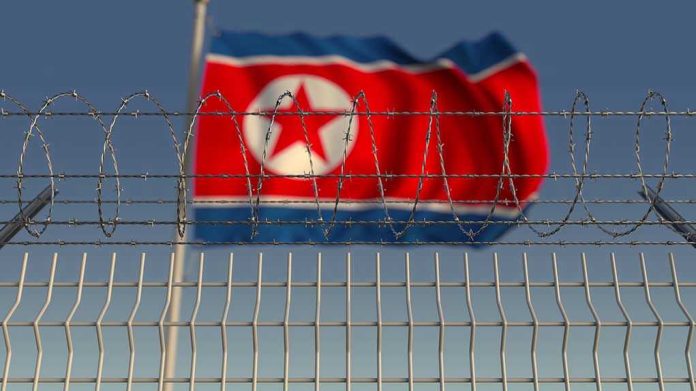
One unarmed North Korean risked life and limb to cross the most dangerous border on earth—just as South Korea’s new government decided to play nice with Pyongyang, raising serious questions about whether appeasement is now the official policy for handling tyrants.
At a Glance
- An unarmed North Korean man crossed the DMZ into South Korea, dodging landmines and military patrols.
- The crossing occurred as Seoul halts anti-North broadcasts and cracks down on activists sending leaflets northward.
- The defector’s identity and motives remain undisclosed, fueling debate about border security and humanitarian policy.
- Critics argue Seoul’s softened approach emboldens Pyongyang and undermines deterrence.
A Defector, a Softened Border, and a Recipe for Disaster?
On Thursday, a North Korean man did the unthinkable: he crossed the world’s most fortified border, the Korean Demilitarized Zone, and walked straight into the hands of South Korean troops. No shots fired, no landmines detonated—just a desperate bid for freedom, or perhaps something more calculated, all happening while the South’s government chose this week of all weeks to turn down the rhetorical heat on Kim Jong Un’s regime. The man’s identity and reasons remain a mystery, but the timing is impossible to ignore. South Korea’s new president, Lee Jae Myung, has just halted loudspeaker propaganda broadcasts and moved to ban activists from sending information balloons into the North. The regime in Pyongyang, meanwhile, continues its routine of launching trash-filled balloons and flexing military muscle at the border. If you were hoping for a sign that appeasement brings peace, you might want to keep looking.
For those who have watched the DMZ for years, the idea of a civilian slipping through undetected is almost laughable. The border is a 2.5-mile-wide, 160-mile-long death trap, with barbed wire, guard towers, and enough landmines to make even the most foolhardy hesitate. Most defectors go through China, not a live minefield. Yet as Pyongyang gets bolder and Seoul gets softer, here we are: a lone North Korean walks in, and the world shrugs. The United Nations Command was notified, but there were no unusual moves from the North. Maybe Kim Jong Un was too busy reading the latest South Korean press releases about dialogue and reconciliation. Or maybe, just maybe, this is the beginning of a new kind of border test—one that sees how far South Korea is willing to go in rolling out the red carpet for those from the North, no questions asked.
A Pattern of Provocations and Policy Paralysis
Thursday’s border crossing is just the latest in a string of bizarre incidents along the DMZ. In April, ten North Korean troops strolled across the military line before scurrying back after a warning shot. Last year saw three similar incursions. Meanwhile, Pyongyang has been busy launching thousands of garbage-filled balloons into the South, a literal and figurative dumping on their neighbors. Through it all, diplomatic talks have stalled and the new South Korean administration appears determined to avoid confrontation at all costs. Critics are not subtle: they warn that this new era of “engagement” simply emboldens the North, encouraging more bold crossings, more provocations, and more headaches for those who still believe in national sovereignty and the rule of law.
South Korean officials insist the latest crossing is under investigation and that no one should jump to conclusions about the man’s intentions. Perhaps he’s a genuine refugee fleeing tyranny. Perhaps he’s a plant, sent to test the South’s resolve. Either way, the real story is not just about one man with nothing to lose—it’s about a government with everything to lose, playing nice with a dictatorship that understands only strength. Ordinary South Koreans, already anxious after years of missile threats and border violations, now have to wonder: if the DMZ is open for business, what’s next? Welcome mats at the gates of Seoul?
The Real Cost: Security, Sovereignty, and Common Sense
The DMZ was created after the Korean War armistice in 1953, a symbol of hard-won sovereignty and a buffer against Communist aggression. No peace treaty ever ended the war—meaning, technically, the two Koreas are still at war. Yet today, with border incidents on the rise and South Korea’s official policy shifting from deterrence to dialogue, the meaning of the DMZ is under siege. Human rights groups rightly demand protection for defectors, but there is a world of difference between humanitarian outreach and rolling over for a rogue regime.
Security analysts and common sense conservatives alike see the writing on the wall. When your enemy sends trash and soldiers across your border and your answer is to silence your own activists and mute your own speakers, you’ve surrendered the moral high ground. The left’s utopian fantasy of engagement at any cost comes at a steep price: diminished deterrence, emboldened adversaries, and a border that is, for the first time in decades, more porous than ever. The lesson, as always, is that peace through strength works—and appeasement only invites trouble.
Sources:
Fox News: North Korean man crosses DMZ into South Korea
The Associated Press: North Korean defector crosses heavily fortified border into South
The Wall Street Journal: North Korean defector crosses DMZ into South Korea