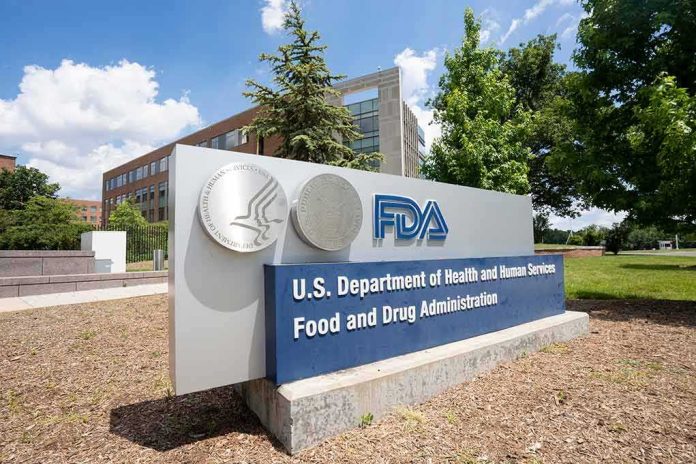
Deadly botulism risk prompts urgent FDA Class I recall of salted smoked herring distributed across three states, marking the highest-risk classification for foodborne threats.
Key Takeaways
- P. East Trading Corp. has recalled 81 cases of Salted Smoked Split Herring due to potential botulism contamination, affecting products distributed in New York, New Jersey, and Connecticut
- The FDA has issued their highest risk designation (Class I) for this recall, indicating significant threat of serious health consequences or death
- The affected herring was often repackaged by retailers from 18-pound wooden boxes, making it difficult for consumers to identify
- No illnesses have been reported as of June 10, but consumers are strongly advised to return any purchased product for a full refund
- Botulism poisoning can cause paralysis, difficulty breathing, and potentially death if untreated
Highest-Risk FDA Classification Issued for Fish Product
The FDA has issued its most serious recall classification for Salted Smoked Split Herring distributed by P. East Trading Corp. after discovering the fish products may contain Clostridium botulinum, the deadly bacterium that causes botulism. The Class I designation indicates regulators believe there is a reasonable probability that consuming the affected products will cause serious adverse health consequences or death. The recall encompasses 81 cases of herring distributed through numerous retail locations across New York, New Jersey, and Connecticut, including Pioneer Supermarket, Joe’s Market #3, Key Food Supermarket, and other specialty food retailers throughout the tri-state area.
“P. East Trading Corp Distributors of Bronx, NY, is recalling its Salted Smoked Split Herring because the product, found to be over 5 inches in length and uneviscerated, has the potential to be contaminated with Clostridium botulinum, a bacterium that can cause life-threatening illness or death,” said P. East Trading Corp Distributors.
Product Identification and Distribution Challenges
The recalled herring was manufactured by Sea Star Seafood Ltd. of Canada and carries the code Lot 1PRC5073. Identifying affected products may prove challenging for consumers since many retailers repackaged the fish from its original 18-pound wooden boxes. The company acknowledged that the fish “might not have been fully eviscerated” during processing, which creates ideal conditions for botulinum toxin production. This issue was discovered during routine inspection by the New York State Department of Agriculture and Markets Food Inspector and confirmed by subsequent laboratory analysis.
“The product was likely to be repacked by these retail locations in deli-style or other retail packaging,” according to June 10 recall notice.
Serious Health Risks Associated with Botulism
Botulism poses a severe health threat, particularly with uneviscerated fish products over five inches in length. The FDA maintains ongoing import alerts against such products due to the elevated risk of contamination. Botulism poisoning attacks the body’s nervous system, causing muscle paralysis that can spread from the face downward. Symptoms typically begin 18-36 hours after consuming contaminated food, though they can appear as early as 6 hours or as late as 10 days after exposure. Early warning signs include double vision, blurred vision, drooping eyelids, slurred speech, difficulty swallowing, and muscle weakness.
“In foodborne botulism, symptoms generally begin 18 to 36 hours after eating contaminated food. However, symptoms can begin as soon as 6 hours after or up to 10 days later,” said CDC.
Consumer Guidance and Company Response
While no illnesses have been reported in connection with these products, the company is urging consumers not to take any chances. Anyone who has purchased the affected herring should return it to the place of purchase for a full refund rather than consuming it. The distributor has also issued guidance about food preparation safety, emphasizing the importance of thorough inspection and cleaning of fish products before consumption. This incident highlights the ongoing regulatory challenges with imported seafood products and the importance of proper evisceration during processing.