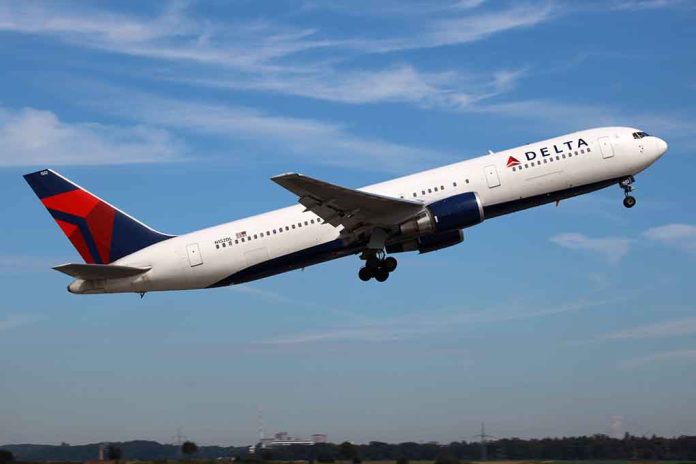
A Delta pilot turned his taxiing aircraft around to rescue an unaccompanied minor and over 30 international travelers stranded by delays, demonstrating true leadership when corporate America usually falls short.
Key Takeaways
- A Delta pilot made the rare decision to return to the gate after already leaving, specifically to board an unaccompanied minor who would have otherwise been stranded.
- Over 30 additional international travelers benefited from this decision, including passengers headed to a Lady Gaga concert in Rio de Janeiro.
- The pilot’s actions aligned perfectly with Delta’s Unaccompanied Minor Program policies, ensuring the child received proper supervision and assistance.
- This “Delta Miracle” stands in stark contrast to the airline’s previous controversy regarding a whistleblower pilot who faced retaliation after reporting safety concerns.
- The incident showcases how individual decision-making can still triumph within corporate environments when customer safety and satisfaction are prioritized.
Pilot’s Quick Thinking Saves the Day for Stranded Travelers
In a refreshing display of customer service rarely seen in today’s corporate America, a Delta Air Lines pilot recently made an extraordinary decision that passengers are calling a “Delta Miracle.” After a flight from Charlotte to Atlanta was delayed, more than 30 passengers faced missing their connecting international flight to Rio de Janeiro. Most concerning among these stranded travelers was a young boy traveling alone under Delta’s Unaccompanied Minor Program. Rather than follow standard protocol and continue taxiing for takeoff, the pilot made the uncommon decision to return to the gate specifically to board the minor and the other affected passengers.
“Several of us, including myself, needed to catch the flight for the epic Lady Gaga concert the next day in Rio,” said Priya Lal, a passenger who shared the experience on Reddit.
The decision proved especially critical because missing this connection would have left passengers with no direct flights to Rio until the following Tuesday. This could have ruined plans for numerous travelers, including those planning to attend the highly anticipated Lady Gaga concert. While airlines are notorious for strict adherence to schedules and protocols, this pilot demonstrated that sometimes human judgment can and should override standard operating procedures when the welfare of passengers is at stake.
Delta’s Unaccompanied Minor Program in Action
The pilot’s decision perfectly aligned with Delta’s Unaccompanied Minor Program, which includes specific procedures designed to ensure children traveling alone are properly escorted and supervised throughout their journey. These policies establish clear guidelines for airline staff regarding the proper handling of unaccompanied minors, including ensuring they make connecting flights safely. This incident demonstrates the program working as intended, with staff identifying a potential problem and taking appropriate action to protect a vulnerable young passenger.
“But dozens of passengers started piling in from late connections. The little boy alone saved 30-plus passengers and got us to the concert,” said Priya Lal.
Reddit users commenting on Lal’s post speculated whether the same decision would have been made if only adult passengers were affected by the delay. This raises valid questions about how airlines prioritize different categories of travelers and what circumstances must align for such exceptions to be made. The presence of the unaccompanied minor likely provided additional justification for the pilot’s decision, but the outcome benefited dozens of other travelers facing significant disruption to their plans.
A Stark Contrast to Delta’s Past Whistleblower Controversy
This positive story comes against the backdrop of Delta’s prior controversy involving a whistleblower pilot who reported safety concerns, only to face serious retaliation. That pilot raised issues about critical matters like pilot fatigue and training gaps under whistleblower protection laws, but was subsequently grounded for nearly two years after Delta had her diagnosed with bipolar disorder. A federal arbiter later supported many of the pilot’s claims, specifically noting that Delta showed no actual faults in her flying ability.
“We all were able to get on the plane and off to Rio. That was one Delta Miracle. Never seen such a thing,” said Priya Lal.
The contrast between these two incidents highlights the ongoing tension within major airlines between following rigid corporate procedures and allowing human judgment to prevail. While the whistleblower case raised serious questions about Delta’s corporate culture regarding safety reporting, this recent “Delta Miracle” suggests that individual employees can still make customer-focused decisions when circumstances demand flexibility. For conservative Americans who value both personal responsibility and proper care for children, this pilot’s actions represent the type of leadership we should expect from American businesses.