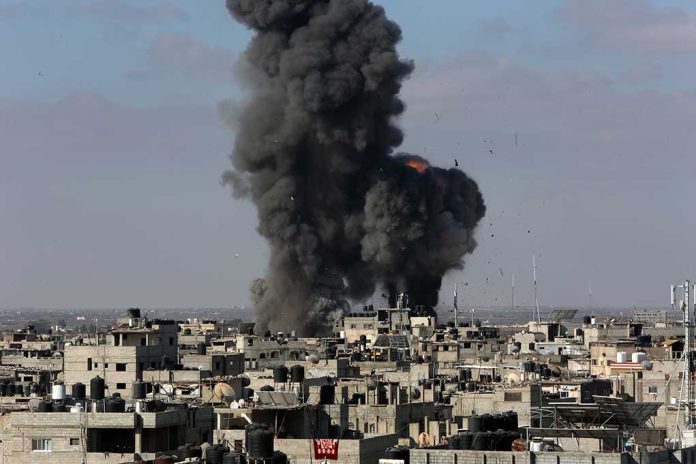
Israel launches devastating airstrikes on Yemen’s Houthi-controlled territories, destroying Sanaa airport and issuing urgent evacuation warnings for three major ports as conflict escalates despite a U.S.-brokered ceasefire that excluded Israel.
Key Takeaways
- Israel has issued urgent evacuation warnings for residents near three Yemeni ports (Ras Isa, Hodeidah, and Salif) after being excluded from a U.S.-Houthi ceasefire deal.
- Israeli airstrikes have already disabled Yemen’s main airport in Sanaa, destroying commercial aircraft and runways.
- At least seven people were killed and 74 wounded over two days of Israeli attacks, according to Houthi reports.
- President Trump announced America would stop striking the Houthis, claiming they had “capitulated,” but the rebels vowed to continue targeting Israel.
- Defense Minister Israel Katz emphasized Israel’s determination to “defend itself by itself” against ongoing Houthi threats.
Israel’s Military Operation Against Yemen Intensifies
The Israeli military has dramatically escalated its operations against Yemen’s Houthi rebels, bombing the airport in the rebel-held capital of Sanaa and disabling the airfield. Commercial aircraft on the tarmac were set ablaze during the attack, which came in response to a Houthi ballistic missile strike near Tel Aviv’s Ben-Gurion International Airport. This marks a significant intensification of Israel’s campaign against the Iran-backed rebel group that has repeatedly targeted Israel and disrupted international shipping in the Red Sea since the Gaza war began.
The scope of Israel’s military response has been substantial, with reports indicating the strikes involved 50 bombs and required mid-air refueling, demonstrating Israel’s capability to project power as far as Iran if necessary. The Houthis reported that at least seven people were killed and 74 wounded over two days of Israeli attacks, though these figures cannot be independently verified. This aggressive response underscores Israel’s determination to eliminate threats from the Houthi rebels despite their geographic distance.
Evacuation Warnings Signal Impending Military Action
In a clear indication of imminent military strikes, Israel has issued evacuation warnings for three ports in Yemen: Ras Isa, Hodeidah, and Salif. This warning, posted by IDF Arabic media spokesperson Avichay Adraee on social media, is the second such evacuation notice within a week, following the warning for Sanaa’s international airport before it was disabled by Israeli strikes. The timing of these warnings is particularly significant as they come immediately after a ceasefire deal between the U.S. and the Houthis that pointedly excluded Israel.
“Israel must be able to defend itself by itself against any threat and any enemy,” stated Defense Minister Israel Katz
“This has been true in the face of many past challenges, and it will remain true in the future.”
U.S.-Houthi Ceasefire Excludes Israel
President Trump recently announced that America would stop striking the Houthis, claiming they had “capitulated” and agreed to stop targeting shipping in the Red Sea. This ceasefire, brokered with assistance from Oman’s foreign minister Badr al-Busaidi, specifically addressed attacks on commercial shipping but deliberately excluded Israel from its protections. The development represents a significant shift in U.S. policy that has left Israel to contend with Houthi threats independently.
“Today’s news about the situation in the Red Sea means that diplomatic efforts have led to the end of the conflict between the US and Ansar Allah in Yemen,” said Badr al-Busaidi, Oman’s foreign minister.
“They will no longer target each other, ensuring freedom of navigation for international commercial shipping in the Red Sea.”
Despite this deal, the Houthis have explicitly stated they will continue attacks on Israel in support of Gaza’s Palestinian population. Mahdi al-Mashat, head of the Houthi’s supreme political council, issued a veiled threat regarding President Trump’s planned visit to the region, stating: “We indirectly informed the Americans that the continued escalation will affect the criminal Trump’s visit to the region, and we have not informed them of anything else.”
Implications for Regional Stability
The U.N. special envoy for Yemen, Hans Grundberg, described the Israeli strikes as a “grave escalation” and urged restraint from all parties. However, Israel appears determined to press forward with its military campaign against the Houthis, particularly as the rebels have vowed to continue targeting Israel despite the U.S.-brokered ceasefire. The intensifying conflict threatens to further destabilize a region already reeling from multiple ongoing conflicts and humanitarian crises.
“Israel must be able to defend itself by itself against any threat and any enemy,” stated Defense Minister Israel Katz. “This has been true in the face of many past challenges, and it will remain true in the future.”
While data suggests larger shipping firms are slowly returning to the Red Sea, traffic remains significantly below normal levels. The prospect of continued Israeli strikes on Houthi-controlled territories, including critical port facilities, threatens to further disrupt international shipping and exacerbate Yemen’s already dire humanitarian situation. With Israel vowing to defend itself independently and the Houthis pledging ongoing attacks, the cycle of escalation shows no signs of abating.